Brief Summary of the Project:
Brief Summary of the Project:
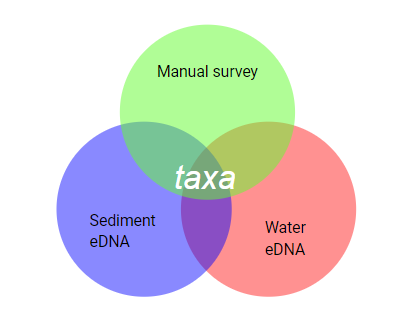
I am writing a report that examines all of the previous and current macroinvertebrate data collected by this lab. Macroinvertebrates are often used to indicate the ecological health of water bodies, and are also an important food source for fish and animals, so this data may inform management of the slough at multiple levels. The report describes the temporal and spatial patterns of macroinvertebrate presence throughout the slough. The temporal changes help characterize how the winter breaching of this temporary open-closed estuary affects the macroinvert populations. Three years of manual sampling data, one year of aquatic eDNA and one round of sediment eDNA are being combined, and the differences in taxa identification will help assess these methods.
Photo Courtesy of Chris Kracha
In winter quarter, I combined all years of manual and eDNA data and sorted the taxa into groups based on their properties as indicators. I collected literature on macroinvertebrate indicators as well. Indicator properties include the organisms' tolerance and sensitivity to bad water quality, as well as their potential to be involved in certain trophic cascades related to water quality. This winter I also developed my protocol for sediment eDNA sampling and processing, with the help of PhD student Joanna Tang who is working on a similar project in vernal pools.
Future Plans for the Lab:
In spring quarter I will be taking sediment eDNA samples, and processing them for sequencing. Sediment sampling is less studied than the other methods of invert sampling, so it will be useful to compare my results to the aquatic eDNA and manually sorted samples. I will also be assisting with Joanna's and Alyssa Jain's processing of individual species in preparation for genomic sequencing. Once these invert genomes are uploaded to the web, we will be able to re-BLAST the sequences we received from Jonah Ventures and get more results and high taxonomic resolution of invertebrates that were previously sampled for aquatic eDNA.
People Involved:
Chris Kracha: Student Project Leader
Alison Rickard: Lab Director; CCBER Research and Monitoring Coordinator
Lauren Stiles: Fellow Student Project Leader
Lily Huynh: Fellow Student Project Leader
Kylie Malone: Student Volunteer
Brenna Scholte: Student Intern
About the Project Leader:
My name is Chris and I'm a senior environmental studies major. I started at the lab over summer when I worked with the eDNA data, and I later decided to write my senior thesis with the lab. I love to cook, swim, play clarinet, and read in my free time.